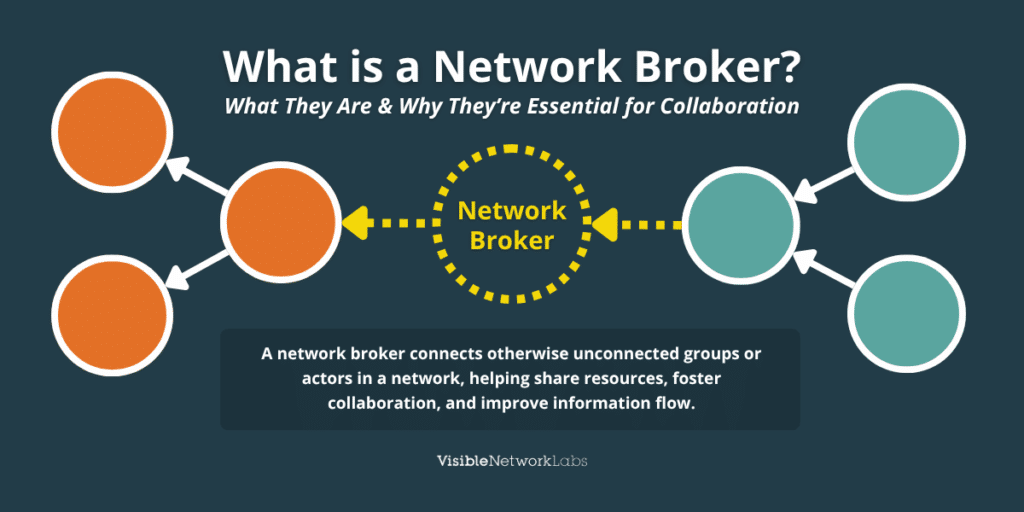
In every community or organizational network, there are key individuals who help keep the system connected and effective. These people are known as network brokers—individuals who sit at strategic points in a network and play a crucial role in facilitating collaboration, resource-sharing, and information flow.
Understanding broker roles can help you recognize and empower the right people to strengthen your network’s health and resilience.
The Five Types of Network Brokers
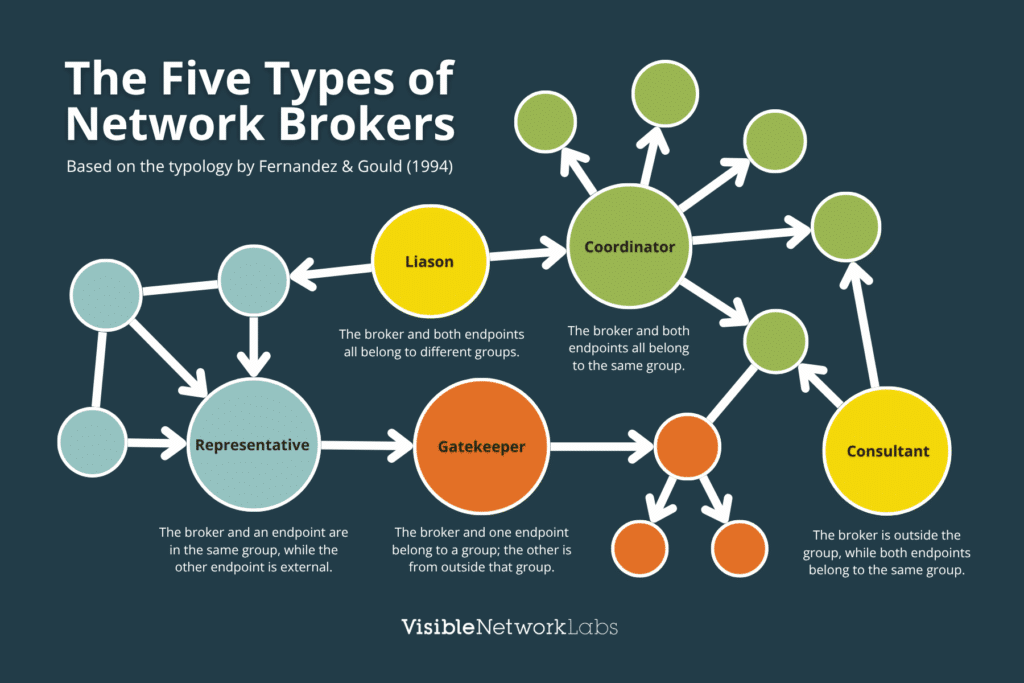
There are five main types of network brokers, each playing a unique role in how relationships and resources flow through a network.
1. Liason
Liaisons connect individuals or groups that belong to different subgroups or organizations. They act as bridges between silos and help break down barriers that limit collaboration.
2. Coordinator
Coordinators operate within a single group, helping organize internal activities and communications. They play a key role in ensuring alignment and reducing redundancies.
3. Representative
Representatives connect their own group to other groups. They serve as the face or voice of their group in cross-group interactions, ensuring their group’s interests are communicated and understood.
4. Gatekeeper
Gatekeepers control access to their group. They filter and manage what information or relationships come into their network, often playing a protective or curatorial role.
5. Consultant
Consultants are external actors who connect different groups without belonging to any one of them. They offer objectivity and often bring in outside perspectives and expertise to inform group decisions.

Map and Identify Network Brokers with SNA
Using social network analysis tools you can identify these types of brokers in your own network. This kind of network data-driven relationship intelligence is vital for designing strong, resilient networks and fostering strategic collaboration across silos.
See it in Action—Request a Demo
Curious how SNA works? We’ll show you how PARTNER CPRM can surface hidden dynamics and key players in your network to support more informed decisions and deeper engagement.
Get started today and request your 1:1 web demo with a network strategy expert.