For more than a decade, “collaboration” has been the social impact watchword. Coalitions, alliances, and collective impact initiatives have flourished.
Yet most ecosystem builders know the hard truth: good intentions alone don’t sustain change. Without coordination, connective tissue, and accountability, partnerships stall.
Enter the field catalyst.
Table of Contents
The Rise of Field Catalysts
Bridgespan’s 2025 update highlights the growing importance of field catalysts—entities that don’t simply join partnerships, but orchestrate them. They set shared agendas, steward knowledge, align incentives, and help networks navigate complexity.
At Visible Network Labs, we embrace this idea using our own language: network weavers and ecosystem builders. The words differ, but the insight is the same.
Ecosystems thrive when they have dedicated stewards who ensure the whole truly exceeds the sum of its parts. Orchestration makes that happen.
Why Orchestration Matters
Funders, governments, and community stakeholders are raising the bar. They’re no longer satisfied with counting how many meetings took place or how many organizations showed up.
Leaders want to know whether the ecosystem is moving together, whether resources are shifting, and whether outcomes are emerging that no single player could achieve alone.
The question has evolved—from “Are we working together?” to “Who is orchestrating our collective work, and how are we learning from it?” That shift marks the difference between passive convening and true ecosystem leadership.
Get our monthly newsletter with resources for cross-sector collaboration, VNL recommended reading, and upcoming opportunities for engaged in the “network way of working.”
What Field Catalysts Actually Do
Create value for the field:
Align vision → shared agenda: convene actors to set priorities, success metrics, and a time-bound roadmap everyone signs onto.
Clarify governance: define roles, decision rights, and escalation paths so work moves without stalemates.
Build trust & psychological safety: facilitate hard conversations, mediate conflicts, and normalize learning over blame.
Reduce duplication, close gaps: map who does what, spot overlaps and white-spaces, and reassign work to comparative strengths.
Widen the table with equity: bring in overlooked communities, small orgs, and “unlikely partners”; ensure their influence in decisions.
Coordinate resources: broker pooled funding, align grants and in-kind supports, and route resources to the highest-leverage work.
Generate benefits for member organizations:
Clear asks, fewer meetings: tighter scopes, better agendas, and role clarity save time.
Greater visibility & credibility: network maps, trust/value metrics, and outcomes amplify each member’s contribution.
Better partnerships & referrals: data reveals high-value connectors and introductions that expand reach.
Improved fundraising: shared evidence and dashboards strengthen grant applications and renewals.
Faster problem-solving: cross-sector escalations happen in days, not months, through pre-agreed channels.
Capacity building: access to training, tools, and coaching in network leadership, measurement, and equity practice.
Beyond Mapping: Coordination with Evidence
At VNL, we often talk about “moving beyond mapping.” Visualization is only the starting point. Real impact requires measurement, tracking, and adaptability over time. It means analyzing how relationships shift, whether trust deepens, and how value flows across the network—not just drawing a picture of who is connected.
Our article Ecosystem Strategies Need CPRMS illustrates this well, showing how network data uncovers trust dynamics, leverage points, and blind spots across sectors like health, housing, workforce, and education.
In other words, orchestration guided by data—not just guesswork and intuition—distinguishes true catalysts from passive conveners.
A VNL Example: Keeping Forests
The Keeping Forests Coalition offers a tangible case. When they partnered with us, they used PARTNER CPRM to map and strengthen their collaborative ecosystem. The analysis revealed structural gaps and surfaced “unlikely partners” that expanded engagement beyond traditional conservation circles. As Executive Director Laura Calandrella put it:
“Keeping Forests believes wholeheartedly that the future of conservation is collaborative. To collaborate consciously, the ecosystem map and analysis will enable us to look beyond the borders of our traditional networks.”
That kind of “aha” moment—discovering partners you didn’t know existed—is exactly what field catalysts make possible.
How PARTNER CPRM Powers Field Catalysts
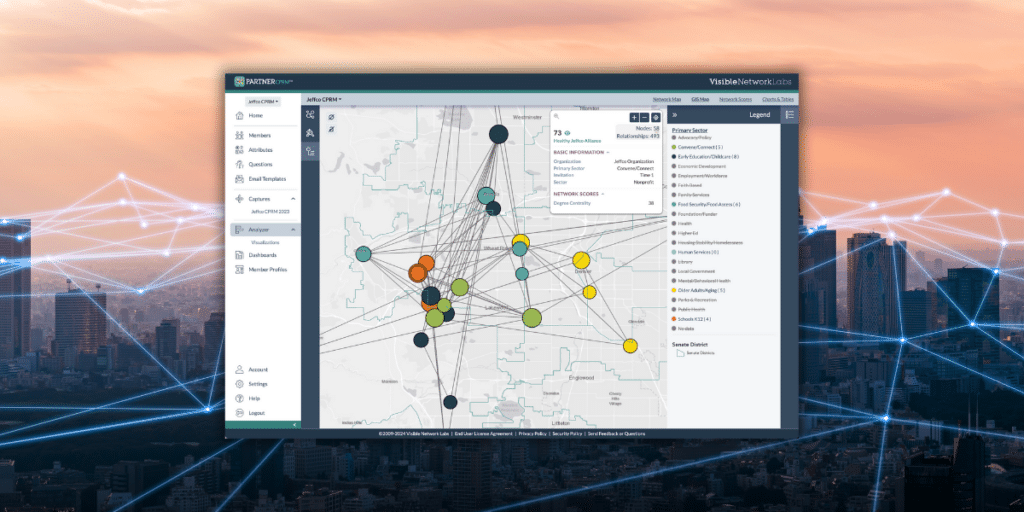
This is where tools like social network analysis and ecosystem mapping shine, especially when embedded in PARTNER CPRM. The platform helps ecosystem leaders see invisible structures, pinpoint leverage points, monitor progress over time, and ground their strategy in evidence rather than anecdotes. For funders and stakeholders, this translates into visible proof of alignment and momentum.
Unlike generic CRMs, PARTNER CPRM is purpose-built for ecosystems. It maps relationships across organizations, measures trust and value exchange, and offers dashboards that resonate with funders, policymakers, and partners alike. It enables continuous learning loops, turning static coalitions into dynamic, responsive systems.
If you aspire to be the field catalyst for your ecosystem, PARTNER delivers the evidence and storytelling toolkit to make it real.
Orchestration for Coordination
In 2025, collaboration without orchestration no longer cuts it. Ecosystem builders across public health, conservation, housing, education, and workforce development must step into the catalyst role—aligning partners, weaving trust, and guiding strategy with clarity.
At VNL, we believe orchestration emerges when platform and expertise come together. With PARTNER CPRM and our network science support, you gain the insight and confidence to act with authority—and to show it.
Ready to See It in Action?
Are you ready to step into your field-catalyst role?
Request a PARTNER CPRM demo today and see how you can orchestrate your ecosystem with confidence, clarity, and data-driven impact.
FAQs
Q: What is a “field catalyst”?
A: A field catalyst is a backbone-type organization that orchestrates a field or ecosystem: aligning actors around a shared agenda, brokering relationships, coordinating resources, and stewarding learning so the field achieves outcomes no single actor can reach alone.
Q: What do you mean by “ecosystem orchestration”?
A: Ecosystem orchestration is the practice of coordinating people, resources, data, and timing across organizations to move a field in sync—shifting from “meetings and updates” to evidence-guided, role-clear execution.
Q: How is a field catalyst different from a coalition convener or network weaver?
A: Conveners gather people; network weavers connect them. Field catalysts do both—plus governance, shared measurement, and strategy execution—so collaboration produces measurable, field-level change.
Q: Why do funders care about orchestration?
A: Funders increasingly ask who is coordinating, how trust and alignment are changing, and what system-level outcomes are emerging. Orchestration provides the structure and data to answer those questions credibly.
Q: What value do field catalysts provide to members of the field or ecosystem?
A: Examples of the value they generate includes:
Clear roles and decision rights (fewer meetings, faster moves)
Data that de-politicizes priorities (trust/value metrics, network gaps)
Better partner matches and referrals
Stronger grant reporting and renewals via shared dashboards
Capacity-building in network leadership and equity practice
Q: Which metrics matter for field catalysts?
A: Start with:
Trust (reliability, mission fit, transparency)
Value (influence, level of involvement, resources contributed)
Structure (density, centrality, betweenness/bridges, clustering)
Equity & inclusion (representation and influence across groups)
Progress signals (shared agenda adoption, policy shifts, pooled funding)
Q: What are common pitfalls field catalysts help avoid?
A: Endless meetings without decisions, duplicated efforts, invisible power dynamics, unclear roles, over-centralized hubs that bottleneck action, and funder reporting that lacks network-level evidence.
Q: What is PARTNER CPRM?
A: PARTNER CPRM is a platform built for ecosystem leaders to map networks, measure trust and value, identify key players/gaps, and publish dashboards for partners and funders—supporting continuous, data-driven orchestration.
Q: Who typically uses PARTNER CPRM?
A: Backbone/catalyst organizations, collaboratives, public health departments, community foundations, place-based initiatives, digital inclusion coalitions, housing/homelessness systems, climate and mobility networks, and education/workforce partnerships.
Sources & Further Reading
- Bridgespan Group. (2025). Field Catalysts: The Next Wave of Systems Leaders.
- Visible Network Labs. (2020). Ecosystem Strategies Need CPRMs.
- OECD. (2024). Building Trust for Effective Governance.
- Stanford Social Innovation Review. (2020). The Dawn of System Leadership.
- KU Social Innovation Lab. (2025). Moving Beyond Mapping: A Guide to Ecosystem Measurement
- Deloitte Insights. (2023). Rethinking traditional management in workforce ecosystems: Four areas for strategic change